Pasture management

Pasture management
A biodiverse pasture full of life, that sounds like something very natural, but in practice, it is often hard to find. Many grasslands consist of only a few dominant (rye)grasses, with little room for herbs, flowers, or other plant species. Yet, animals thrive on a diverse diet, where they can choose for themselves. Whether you keep horses, chickens, sheep, or goats: if given the chance, they will search for exactly the plants they need at that moment. They forage with their instinct.
Biodiversity means choice. And choice means balance.
Grass as nutrition and medicine
The ancient Greek physician Hippocrates already said:
“Let food be thy medicine, and medicine be thy food.”
This applies to humans, but just as much to animals. When an animal has access to a wide spectrum of grasses, plants, trees, flowers, and herbs, it can select what its body needs. Sometimes these are bitter substances to support digestion, then again tannins for immunity, or essential oils with a purifying effect. And that is the power of a biodiverse pasture.
Difference between production grass and organic grass seed
Most conventional pastures consist of fast growers. Grasses that have been bred to produce as much mass as possible, fed with artificial fertilizer or slurry. They look green and full but lack structure, contain many sugars and undeveloped proteins, and are often poor in trace elements. As is sometimes said, it is "grass-phalt". They are grazed short, become exhausted, and provide nutrition that is more burdening than supportive. Especially hardy animals like horses, ponies, or goats are sensitive to this. The result: an animal with an imbalance and all its consequences.
Organic grasses, on the other hand, grow slowly, root deeply, and are in balance with the soil. They do not demand a nitrogen explosion but strengthen soil life naturally. If you combine these with herbs and flowers, the most beautiful things happen: a rich, vibrant pasture where animals can follow their natural behavior and a landscape that flourishes.
Creating a biodiverse pasture in practice
Do you want more biodiversity in your grassland? Then you can get started with organic grass seed, herb mixtures, or even loose seeds. Whether you are reseeding completely or overseeding an existing pasture, there are many possibilities. Nothing is impossible, you just have to start.
A few practical tips:
-
Sow on open swards: Overseeding works best when the grass is short and there is enough space for the new seed.
-
Do not use artificial fertilizer: This disturbs the soil balance and hinders the establishment of herbs.
-
Temporarily make sections inaccessible for grazing: This gives plants the chance to mature and self-seed.
-
Choose your mixture carefully: For wet or dry soils, for hayfields or grazing pastures, suitable organic mixtures are available. You can read more about it here.
-
Think about balance: Too much clover can lead to a diet too rich in protein, especially for hardy breeds.

Flowers and herbs in a biodiverse grassland
Flowers and herbs not only make your pasture more colorful, they also bring balance. They attract insects (and repel others), extract trace elements from deeper soil layers, and produce substances that support metabolism, digestion, and immunity. Some are heavily eaten, others remain untouched. And that's perfectly fine. Every plant fulfills a function, even if it purely takes place in the soil.
You can choose composed mixtures such as our pasture herb mixture (low, without clovers, good for hay production) or richer flower mixtures like the Wolff mixture as a field margin mixture or the Tübinger bee mixture with perennial flowers, herbs, and natural nitrogen fixers. Do not use the latter two in the horse pasture but rather next to it. This is due to the higher clover content and herbs that are not suitable for horses.
Regenerative pasture management: think in cycles
A biodiverse pasture is not only good for your animals but also for your soil and future harvests. By working with organic seeds, natural fertilization, and extensive management, you contribute to a healthy soil structure, increased CO₂ sequestration, and support a stronger ecosystem.
Feed your grassland with compost, soil bokashi, or material from the Eco-Stable. That is regenerative work, the circle is complete, and you give back to the soil what you took.
In summary: Organic grass seed is more than a green base. It is nutrition, balance, and resilience all in one. By choosing variation, you give animals the chance to choose and thus stay healthy. It may require a little more attention, but you get so much in return: healthier animals, richer soil, less input, and a stable ecosystem.
Ready to sow yourself? Provide the right soil improvers and choose a mixture that suits your animals, soil type, and purpose. This way, you turn your pasture into a vibrant, nutritious landscape full of potential. You can find everything you need at Natuly! (formerly Bio-Ron)

Organic grass seed mixtures
Seeds for horse pastures
-
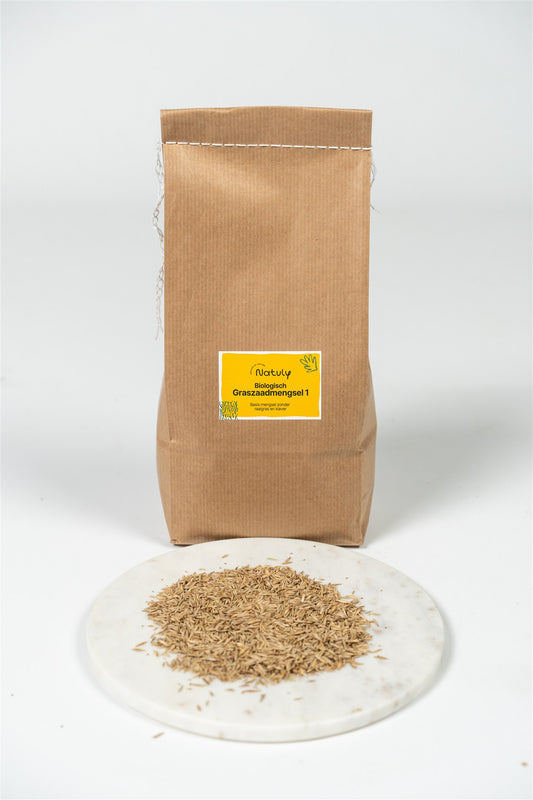
Organic grass seed mixture 1
Regular price From €12,16Regular priceUnit price per -
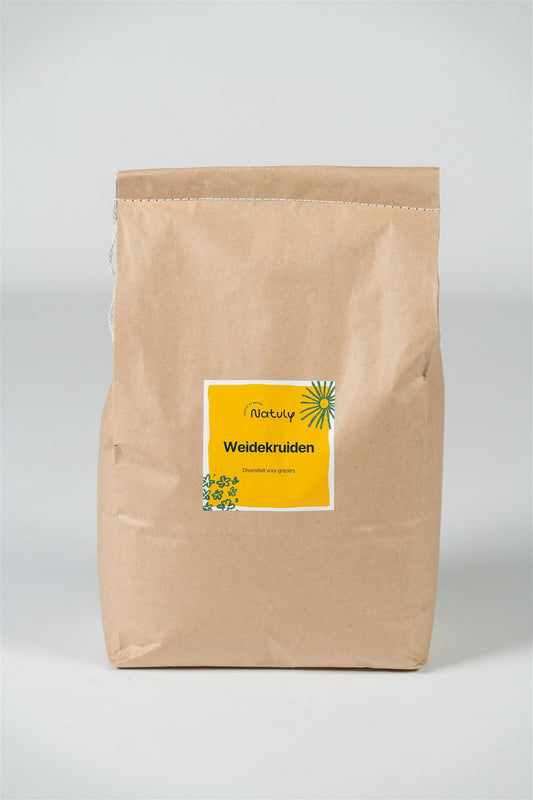
Pasture herbs
Regular price From €9,59Regular priceUnit price per -
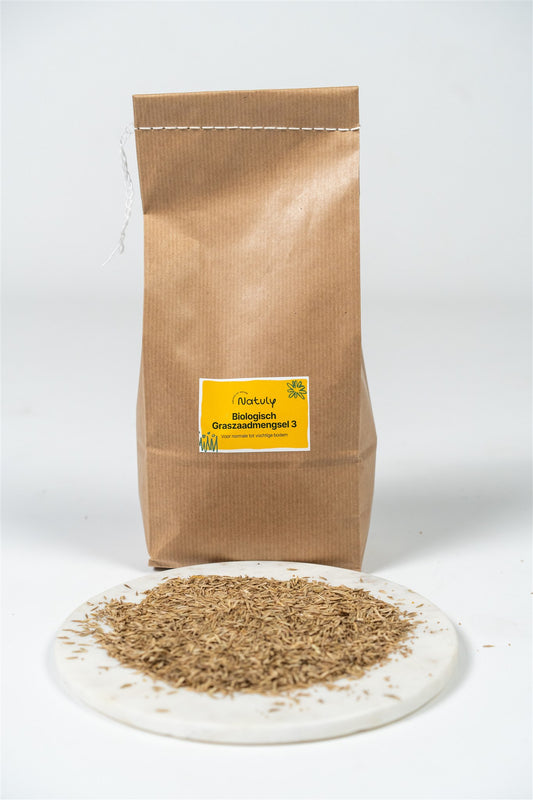
Organic grass seed mixture 3
Regular price From €12,64Regular priceUnit price per -
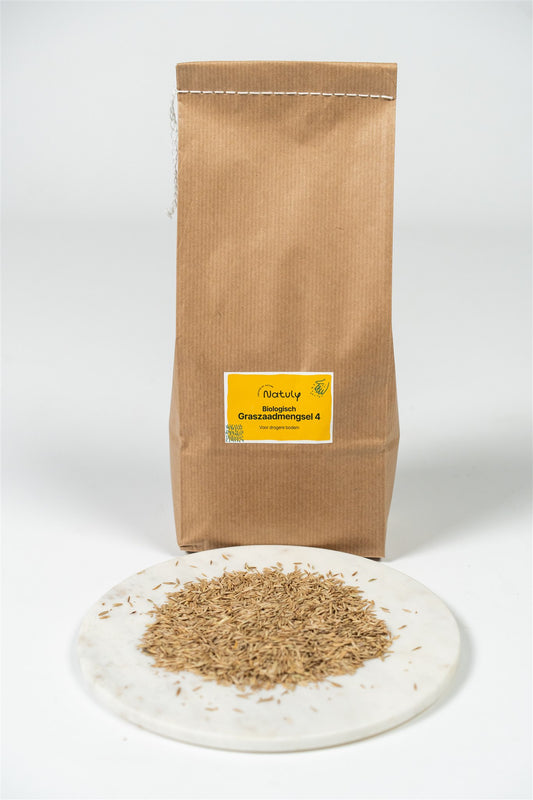
Organic Grass Seed Mixture 4
Regular price From €12,64Regular priceUnit price per